SPORTS MAGAZINE ADS
Citius, Altius, Fortius versus Slow Sport
Uma nova era de esporte sustentável
Downloads
|
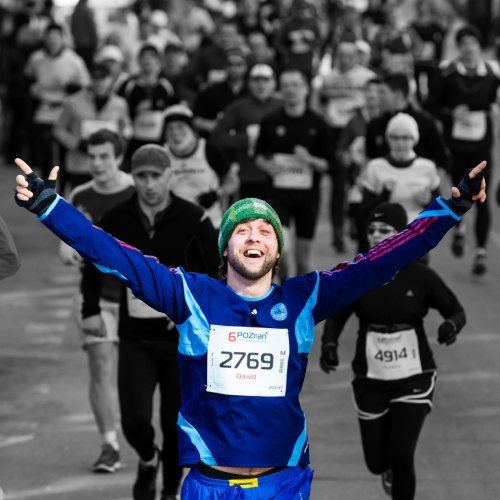
OPEN ACCESS: Artigo disponível/Article available/Artículo disponible - ASSINANTE/SUBSCRIBER: Artigo para Assinante do periódico/Article for Journal Subscriber/Artículo para suscriptores de este periódico - PAY-PER-VIEW: Compre o artigo e leia/Buy the article and read/Compra el artículo y lee - IMAGE: PRESS CENTER 6.Poznań Halfmarathon 2013 (Photo: Marek Zakrzewski) |
Palavras-chave:
Esporte Lento, Movimento Lento, Citius, Altius, Fortius, Turismo Esportivo, Esporte Sustentável, Turismo Sustentável, CorridaResumo
O objetivo deste artigo é apresentar o movimento slow sport como um fenômeno que se desenvolve na era pós-moderna em oposição à ideia de citius, altius, fortius (em português, mais rápido, mais alto, mais forte). A parte teórica do artigo descreve as repercussões do movimento slow sport na saúde e suas implicações para a indústria do esporte e o turismo esportivo. Também aponta novos desafios na gestão esportiva e no turismo esportivo implementados no estilo slow sport. A parte empírica do artigo visa determinar qual a influência da conquista de uma meta esportiva autoimposta no grau de satisfação com a participação em uma corrida. Corredores que não definiram nenhuma meta esportiva e correram por prazer (de acordo com a ideia de slow sport) podem atingir o mesmo grau de satisfação que corredores que definiram uma meta esportiva ambiciosa e a alcançaram (de acordo com a ideia de citius, altius, fortius)? O estudo de caso é a 6ª Meia Maratona de Poznan, um evento de corrida cíclico e popular que acontece na Polônia. Um total de 560 corredores (n = 560) participaram do levantamento diagnóstico realizado por meio de entrevistas. Os testes ANOVA, Kruskal-Wallis e Dunn foram utilizados no estudo. Os resultados mostram que os atletas que não definiram um objetivo esportivo (correram por prazer, companhia, ambiente, participação, etc.) experimentaram o mesmo nível de satisfação que os atletas que alcançaram o objetivo esportivo pretendido. Conclui-se, portanto, que o esporte e a atividade física praticados por prazer, de acordo com a ideia do esporte lento, podem proporcionar o mesmo nível de satisfação que o esporte praticado no espírito de citius, altius, fortius.
Article ⬈ adapted for publication/version in accordance with the journal's submission rules, under the Creative Commons Attribution (CC BY) license ⬈.
Referências
(1) Fullagar S, Markwell K, Wilson E. Slow Tourism: Experiences and Mobilities. Channel View Publication; Bristol, UK: 2012.
(2) Yurtseven H, Kaya O. Slow tourists: A comparative research based on Cittaslow principles. Am. Int. J. Contemp. Res. 2011;1:91–98.
(3) Heitmann S, Robinson P, Povey G. Slow food, slow cities, and slow tourism. In: Robinson P, Heitmann S, Dieke PUC, editors. Research Themes for Tourism. CABI; Wallingford, UK: 2011.
(4) Walker MB. Becoming slow: Philosophy, reading and the essay. In: Oppy G, Trakakis N.N, editors. The Antipodean Philosopher: Public Lectures on Philosophy. Lexington Books; Minneapolis, MN, USA: 2011.
(5) Walker MB. Slow Philosophy. Bloomsbury Academic; London, UK: 2016.
(6) Guttmann A. Sports spectators from antiquity to the Renaissance. J. Sport Hist. 1981;8:5–27.
(7) García Romero F. Sports tourism in Ancient Greece. J. Tour. Hist. 2013;5:146–160. doi: 10.1080/1755182X.2013.828784.
(8) Huggins M. Sport, tourism and history: Current historiography and future prospects. J. Tour. Hist. 2013;5:107–130. doi: 10.1080/1755182X.2013.828782.
(9) Miller D. Historia Igrzysk Olimpijskich i MKOl. Rebis; Warsaw, Poland: 2008.
(10) Schnayder J. Podróże i Turystyka w Starożytności. Państwowe Zakłady Wydawnictw Szkolnych; Warsaw, Poland: 1959.
(11) Towner J. The Grand Tour: A key phase in the history of tourism. Ann. Tour. Res. 1985;12:297–333. doi: 10.1016/0160-7383(85)90002-7.
(12) Brodsky-Porges E. The Grand Tour Travel as an educational devise 1600–1800. Ann. Tour. Res. 1981;8:171–186. doi: 10.1016/0160-7383(81)90081-5.
(13) Aguilo E, Alegre J, Sard M. The persistence of the sun and sand tourism model. Tour. Manag. 2005;26:219–231. doi: 10.1016/j.tourman.2003.11.004.
(14) Ritzer G, Liska A. “McDisneyization” and “Post-Tourism”: Complementary Perspectives on Contemporary Tourism. In: Williams S, editor. Tourism: Critical Concepts in the Social Sciences. Routledge; London, UK: 2004.
(15) Podemski K. Socjologia Podróży. UAM; Poznan, Poland: 2005.
(16) Steckenbauer G. Tourismus und Gessellschaft. (accessed on 1 September 2018)); Available online: http://soziologie.soz.uni-linz.ac.at/sozthe/freitour/skriptum.htm.
(17) Baudrillard J. The Consumer Society: Myths and Structures. SAGE; Thousand Oaks, CA, USA: 1998.
(18) Bauman Z. Ponowoczesne wzory osobowe. Studia Socjologiczne. 1993;2:7–31.
(19) Opaschowski H. Psychologie und Soziologie der Freizeit. Springer; Opladen, Germany: 1988.
(20) Szacki J. Historia Myśli Socjologicznej. PWN; Warsaw, Poland: 2002.
(21) Sieradzki P. Gerharda Schulze Teoria Społeczeństwa Doznań. Wyd. Adam Marszałek; Toruń, Poland: 2011.
(22) World Travel Market Report 2011. (accessed on 1 September 2018); Available online: http://www.comunicatur.info/wp-content/uploads/2011/11/onsite_wtm_industry_report_2011.pdf.
(23) Vehmas H. Rationale of active leisure: Understanding sport, tourism and leisure choices in the Finnish society. Ido Mov. Cult. 2010;10:121–127.
(24) World Travel & Tourism Council 2017. (accessed on 1 September 2018); Available online: https://www.wttc.org/-/media/files/reports/economic-impact-research/regions-2017/world2017.pdf.
(25) Gibson H. Active sport tourism: Who participates? Leis. Stud. 1998;17:155–170. doi: 10.1080/026143698375213.
(26) Hinch T, Higham J. Sport and Tourism: Globalization, Mobility and Identity. Elsevier; Burlington, ON, Canada: 2009.
(27) Hinch T, Higham J. Sport Tourism Development. Channel View Publications; Bristol, UK: 2011.
(28) Ramshaw G, Gammon S. More than just nostalgia? Exploring the heritage/sport tourism nexus. J. Sport Tour. 2006;10:229–241. doi: 10.1080/14775080600805416.
(29) Crawford R. Health as a meaningful social practice. Health. 2006;10:401–420. doi: 10.1177/1363459306067310.
(30) Mathews S, Narotsky D, Bernholt D. Mortality among marathon runners in the United States, 2000–2009. Am. J. Sports Med. 2012;40:1495–1500. doi: 10.1177/0363546512444555.
(31) Redelmeier D, Greenwald J. Competing Risks of Mortality with Marathons: Retrospective Analysis. (accessed on 15 October 2018); doi: 10.1136/bmj.39384.551539.25. Available online: www.bmj.com/content/335/7633/1275.short.
(32) Schulze G. Die Erlebniz-Gesellschaft. Kultursoziologie der Gegenwart. Campus-Verlag; Frankfurt am Main, Germany: 1992.
(33) Isański J. Pogranicza współczesnej turystyki. In: Sahaj T, editor. Pogranicza Współczesnego Sportu. Ujęcie Społeczne. AWF w Poznaniu; Poznan, Poland: 2009.
(34) Pine B.J, Gilmore J.H. Welcome to the experience economy. Harv. Bus. Rev. 1998;76:97–105.
(35) Berbeka J. The value of remote Arctic destinations for backcountry skiers. Scand. J. Hosp. Tour. 2018;18:393–418. doi: 10.1080/15022250.2018.1522728.
(36) Zduniak A. Event jako ponowoczesna forma uczestnictwa w życiu społecznym. Roczniki Nauk Społecznych. 2010;2:207–234.
(37) Cudowska A. Wspólnota w Kulturze Indywidualizmu. (accessed on 13 October 2018); Available online: https://www.repozytorium.uwb.edu.pl/jspui/bitstream/11320/2729/1/Agata%20Cudowska_Wspólnota%20w%20kulturze%20indywidualizmu.pdf.
(38) Beck U. Społeczeństwo ryzyka. W drodze do innej nowoczesności. Scholar; Warsaw, Poland: 2002.
(39) De Coubertin P. New mottoes. In: Müller N, editor. Pierre de Coubertin 1863–1937. Olympism: Selected Writings. International Olympic Committee; Lausanne, Switzerland: 2000.
(40) De Coubertin P. The philosophic foundations of modern Olympism. In: Müller N, editor. Pierre de Coubertin 1863–1937 Olympism: Selected Writings. International Olympic Committee; Lausanne, Switzerland: 2000.
(41) De Coubertin P. The women at the Olympic Games. In: Müller N, editor. Pierre de Coubertin 1863–1937 Olympism: Selected Writings. International Olympic Committee; Lausanne, Switzerland: 2000.
(42) De Coubertin P. A bird’s eye view on an Olympiad. In: Müller N, editor. Pierre de Coubertin 1863–1937 Olympism: Selected Writings. International Olympic Committee; Lausanne, Switzerland: 2000.
(43) Lenk H. Values–Aims–Reality of the Modern Olympic Games. In: Messing M, Müller N, editors. S.O.S. Save Olympic Spirit: Toward a Social Philosophy of the Olympics. Agon Sportverlag; Kassel, Germany: 2012.
(44) Korotov K. Citius, Altius, Fortius. Organ. Dyn. 2008;3:277–287. doi: 10.1016/j.orgdyn.2008.04.006.
(45) Durántez C, Pérez-Turpin JA, Martínez A, Mateos C, Martínez MJ, González A. Principles of the Olympic movement. J. Hum. Sport Exerc. 2010;5:3–14. doi: 10.4100/jhse.2010.51.02.
(46) Martinkova I. Sport competition and health: A healthy relationship? Stud. Phys. Cult. Tour. 2008;15:19–25.
(47) Urry J. Spojrzenie Turysty. PWN; Warsaw, Poland: 2007.
(48) Urry J. Socjologia Mobilności. PWN; Warsaw, Poland: 2009.
(49) MacCannell D. Turysta. Nowa Teoria Klasy Próżniaczej. Warszawskie Wydawnictwa Literackie Muza; Warsaw, Poland: 2002.
(50) Pronger B. Sport Postmodern Times. State University of New York Press; New York, NY, USA: 1998. Post-sport: Transgressing boundaries in physical culture; pp. 277–298.
(51) Atkinson M. Fell running in post-sport territories. Qual. Res. Sport Exerc. 2010;2:109–132. doi: 10.1080/19398441.2010.488020.
(52) Atkinson M. Entering scapeland: Yoga, fell and post-sport physical cultures. Sport Soc. 2010;13:1249–1267. doi: 10.1080/17430431003780260.
(53) Zowislo M. Czy istnieje sport postmodernistyczny. In: Sahaj T, editor. Pogranicza Współczesnego Sportu. Ujęcie Społeczne. Poznań University of Physical Education Publishing House; Poznan, Poland: 2009.
(54) Zuckerman M. Behavioral Expressions and Biosocial Bases of Sensation Seeking. Cambridge Press; New York, NY, USA: 1994.
(55) Gracz J, Walczak M, Tomczak M. Poszukiwanie Doznań Jako Tendencja we Współczesnej Aktywności Sportowo-Rekreacyjnej. Szczecin University; Szczecin, Poland: 2011.
(56) Standeven J, De Knop P. Sport Tourism. Human Kinetics; Champaign, IL, USA: 1999.
(57) Schure M, Christopher J, Christopher S. Mind-body medicine and the art of self-care: Teaching mindfulness to counseling students through yoga, meditation, and qigong. J. Couns. Dev. 2011;86:47–56. doi: 10.1002/j.1556-6678.2008.tb00625.x.
(58) Jahnke R, Larkey L, Rogers C. A comprehensive review of health benefits of qigong and tai chi. Am. J. Health Promot. 2010;24:e1–e25. doi: 10.4278/ajhp.081013-LIT-248.
(59) Martinkova I, Parry J. Zen and sports: Focusing on the quality of experiencing. In: Parry J, Nesti M, Watson N, editors. Theology, Ethics and Transcendence in Sport. Routledge; New York, NY, USA: 2010.
(60) Csikszentmihalyi M. The Psychology of Optimal Experience. Harper & Row; New York, NY, USA: 1990.
(61) Lehto XY, Brown S, Chen Y, Morrison A. Yoga tourism as a niche within the wellness tourism market. Tour. Recreat. Res. 2006;31:25–35. doi: 10.1080/02508281.2006.11081244.
(62) Cynarski W. Peregrynacje turystyczne miłośników sztuk walki. In: Krawczyk Z, Lewandowska-Tarasiuk E, Sienkiewicz J, editors. Aksjologia Podróży. Almamer; Warsaw, Poland: 2012.
(63) Hall E. Beyond Culture. Anchor Pres; Garden City, NY, USA: 1976.
(64) Peterson R. Understanding audience segmentation: From elite and mass to omnivore and univore. Poetics. 1992;21:243–258. doi: 10.1016/0304-422X(92)90008-Q.
(65) Karademir-Hazir I. Cultural Omnivorousness.(accessed on 1 September 2018);2015 Available online: www.oxfordbibliographies.com.
(66) Warde A, Wright D, Gayo-Cal M. Understanding cultural omnivorousness: Or, the myth of the cultural omnivore. Cult. Sociol. 2007;1:143–164. doi: 10.1177/1749975507078185.
(67) Widdop P, Cutts D, Jarvie G. Omnivorousness in sport: The importance of social capital and networks. Int. Rev. Sociol. Sport. 2016;51:596–616. doi: 10.1177/1012690214541101.
(68) Pfister G. Research on traditional games: The scientific perspective. J. Comp. Phys. Educ. Sport. 1997;19:53–64.
(69) Kabzińska-Stawarz I. Sport w kulturach ludów Azji—Kolejna dziedzina deficytowa etnologii. Etnografia Polska. 1991;35:173–189.
(70) Hudson S, Hinch T, Walker G, Simpson B. Constraints to sport tourism: A cross-cultural analysis. J. Sport Tour. 2010;15:71–88. doi: 10.1080/14775081003770991.
(71) Jackson S, Csikszentmihalyi M. Flow in Sports. Human Kinetics; Champaign, IL, USA: 1999.
Publicado
Como Citar / Vancouver
Edição
Seção
ARK
Licença
Copyright (c) 2026 Ewa Malchrowicz-Mośko, Katarzyna Płoszaj, Wiesław Firek

Este trabalho está licenciado sob uma licença Creative Commons Attribution 4.0 International License.