SPORTS MAGAZINE ADS
Citius, Altius, Fortius versus Slow Sport
A New Era of Sustainable Sport
Downloads
|
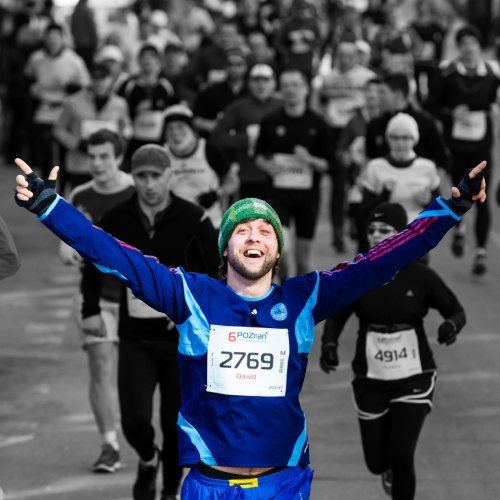
OPEN ACCESS: Artigo disponível/Article available/Artículo disponible - ASSINANTE/SUBSCRIBER: Artigo para Assinante do periódico/Article for Journal Subscriber/Artículo para suscriptores de este periódico - PAY-PER-VIEW: Compre o artigo e leia/Buy the article and read/Compra el artículo y lee - IMAGE: PRESS CENTER 6.Poznań Halfmarathon 2013 (Photo: Marek Zakrzewski) |
Keywords:
slow sport, slow movement, citius, altius, fortius, sports tourism, sustainable sport, flow in sportAbstract
The objective of the article is to present the slow sport movement as a phenomenon developing in the postmodern era in opposition to the idea of citius, altius, fortius (Eng. faster, higher, stronger). The theoretical part of the article describes the health repercussions of slow movement and its implications for the sports industry and sports tourism. It also points to new challenges in sports management and sports tourism implemented in the slow style. The empirical part of the article aims at determining what influence the achievement of a self-set sports goal has on the degree of satisfaction with participation in a running event among runners. Could runners who did not set themselves any sports goal and ran for pleasure (according to the idea of slow sport) achieve the same degree of satisfaction as runners who set themselves an ambitious sports goal and achieved it (according to the idea of citius, altius, fortius)? The case study is the 6th Poznan Half Marathon, a cyclical, popular running event taking place in Poland. A total of 560 runners (n = 560) took part in the diagnostic survey conducted using the interview technique. The ANOVA Rang Kruskal-Wallis test and Dunn’s test were used in the study. The results show that athletes who did not set a sporting goal (ran for pleasure, company, atmosphere, participation, etc.) experienced the same level of satisfaction as athletes who achieved their intended sporting goal. It turns out, therefore, that sport and physical activity done for pleasure in accordance with the slow sport idea can provide the same level of satisfaction as sport practiced in the spirit of citius, altius, fortius.
Article ⬈ adapted for publication/version in accordance with the journal's submission rules, under the Creative Commons Attribution (CC BY) license ⬈.
References
(1) Fullagar S, Markwell K, Wilson E. Slow Tourism: Experiences and Mobilities. Channel View Publication; Bristol, UK: 2012.
(2) Yurtseven H, Kaya O. Slow tourists: A comparative research based on Cittaslow principles. Am. Int. J. Contemp. Res. 2011;1:91–98.
(3) Heitmann S, Robinson P, Povey G. Slow food, slow cities, and slow tourism. In: Robinson P, Heitmann S, Dieke PUC, editors. Research Themes for Tourism. CABI; Wallingford, UK: 2011.
(4) Walker MB. Becoming slow: Philosophy, reading and the essay. In: Oppy G, Trakakis N.N, editors. The Antipodean Philosopher: Public Lectures on Philosophy. Lexington Books; Minneapolis, MN, USA: 2011.
(5) Walker MB. Slow Philosophy. Bloomsbury Academic; London, UK: 2016.
(6) Guttmann A. Sports spectators from antiquity to the Renaissance. J. Sport Hist. 1981;8:5–27.
(7) García Romero F. Sports tourism in Ancient Greece. J. Tour. Hist. 2013;5:146–160. doi: 10.1080/1755182X.2013.828784.
(8) Huggins M. Sport, tourism and history: Current historiography and future prospects. J. Tour. Hist. 2013;5:107–130. doi: 10.1080/1755182X.2013.828782.
(9) Miller D. Historia Igrzysk Olimpijskich i MKOl. Rebis; Warsaw, Poland: 2008.
(10) Schnayder J. Podróże i Turystyka w Starożytności. Państwowe Zakłady Wydawnictw Szkolnych; Warsaw, Poland: 1959.
(11) Towner J. The Grand Tour: A key phase in the history of tourism. Ann. Tour. Res. 1985;12:297–333. doi: 10.1016/0160-7383(85)90002-7.
(12) Brodsky-Porges E. The Grand Tour Travel as an educational devise 1600–1800. Ann. Tour. Res. 1981;8:171–186. doi: 10.1016/0160-7383(81)90081-5.
(13) Aguilo E, Alegre J, Sard M. The persistence of the sun and sand tourism model. Tour. Manag. 2005;26:219–231. doi: 10.1016/j.tourman.2003.11.004.
(14) Ritzer G, Liska A. “McDisneyization” and “Post-Tourism”: Complementary Perspectives on Contemporary Tourism. In: Williams S, editor. Tourism: Critical Concepts in the Social Sciences. Routledge; London, UK: 2004.
(15) Podemski K. Socjologia Podróży. UAM; Poznan, Poland: 2005.
(16) Steckenbauer G. Tourismus und Gessellschaft. (accessed on 1 September 2018)); Available online: http://soziologie.soz.uni-linz.ac.at/sozthe/freitour/skriptum.htm.
(17) Baudrillard J. The Consumer Society: Myths and Structures. SAGE; Thousand Oaks, CA, USA: 1998.
(18) Bauman Z. Ponowoczesne wzory osobowe. Studia Socjologiczne. 1993;2:7–31.
(19) Opaschowski H. Psychologie und Soziologie der Freizeit. Springer; Opladen, Germany: 1988.
(20) Szacki J. Historia Myśli Socjologicznej. PWN; Warsaw, Poland: 2002.
(21) Sieradzki P. Gerharda Schulze Teoria Społeczeństwa Doznań. Wyd. Adam Marszałek; Toruń, Poland: 2011.
(22) World Travel Market Report 2011. (accessed on 1 September 2018); Available online: http://www.comunicatur.info/wp-content/uploads/2011/11/onsite_wtm_industry_report_2011.pdf.
(23) Vehmas H. Rationale of active leisure: Understanding sport, tourism and leisure choices in the Finnish society. Ido Mov. Cult. 2010;10:121–127.
(24) World Travel & Tourism Council 2017. (accessed on 1 September 2018); Available online: https://www.wttc.org/-/media/files/reports/economic-impact-research/regions-2017/world2017.pdf.
(25) Gibson H. Active sport tourism: Who participates? Leis. Stud. 1998;17:155–170. doi: 10.1080/026143698375213.
(26) Hinch T, Higham J. Sport and Tourism: Globalization, Mobility and Identity. Elsevier; Burlington, ON, Canada: 2009.
(27) Hinch T, Higham J. Sport Tourism Development. Channel View Publications; Bristol, UK: 2011.
(28) Ramshaw G, Gammon S. More than just nostalgia? Exploring the heritage/sport tourism nexus. J. Sport Tour. 2006;10:229–241. doi: 10.1080/14775080600805416.
(29) Crawford R. Health as a meaningful social practice. Health. 2006;10:401–420. doi: 10.1177/1363459306067310.
(30) Mathews S, Narotsky D, Bernholt D. Mortality among marathon runners in the United States, 2000–2009. Am. J. Sports Med. 2012;40:1495–1500. doi: 10.1177/0363546512444555.
(31) Redelmeier D, Greenwald J. Competing Risks of Mortality with Marathons: Retrospective Analysis. (accessed on 15 October 2018); doi: 10.1136/bmj.39384.551539.25. Available online: www.bmj.com/content/335/7633/1275.short.
(32) Schulze G. Die Erlebniz-Gesellschaft. Kultursoziologie der Gegenwart. Campus-Verlag; Frankfurt am Main, Germany: 1992.
(33) Isański J. Pogranicza współczesnej turystyki. In: Sahaj T, editor. Pogranicza Współczesnego Sportu. Ujęcie Społeczne. AWF w Poznaniu; Poznan, Poland: 2009.
(34) Pine B.J, Gilmore J.H. Welcome to the experience economy. Harv. Bus. Rev. 1998;76:97–105.
(35) Berbeka J. The value of remote Arctic destinations for backcountry skiers. Scand. J. Hosp. Tour. 2018;18:393–418. doi: 10.1080/15022250.2018.1522728.
(36) Zduniak A. Event jako ponowoczesna forma uczestnictwa w życiu społecznym. Roczniki Nauk Społecznych. 2010;2:207–234.
(37) Cudowska A. Wspólnota w Kulturze Indywidualizmu. (accessed on 13 October 2018); Available online: https://www.repozytorium.uwb.edu.pl/jspui/bitstream/11320/2729/1/Agata%20Cudowska_Wspólnota%20w%20kulturze%20indywidualizmu.pdf.
(38) Beck U. Społeczeństwo ryzyka. W drodze do innej nowoczesności. Scholar; Warsaw, Poland: 2002.
(39) De Coubertin P. New mottoes. In: Müller N, editor. Pierre de Coubertin 1863–1937. Olympism: Selected Writings. International Olympic Committee; Lausanne, Switzerland: 2000.
(40) De Coubertin P. The philosophic foundations of modern Olympism. In: Müller N, editor. Pierre de Coubertin 1863–1937 Olympism: Selected Writings. International Olympic Committee; Lausanne, Switzerland: 2000.
(41) De Coubertin P. The women at the Olympic Games. In: Müller N, editor. Pierre de Coubertin 1863–1937 Olympism: Selected Writings. International Olympic Committee; Lausanne, Switzerland: 2000.
(42) De Coubertin P. A bird’s eye view on an Olympiad. In: Müller N, editor. Pierre de Coubertin 1863–1937 Olympism: Selected Writings. International Olympic Committee; Lausanne, Switzerland: 2000.
(43) Lenk H. Values–Aims–Reality of the Modern Olympic Games. In: Messing M, Müller N, editors. S.O.S. Save Olympic Spirit: Toward a Social Philosophy of the Olympics. Agon Sportverlag; Kassel, Germany: 2012.
(44) Korotov K. Citius, Altius, Fortius. Organ. Dyn. 2008;3:277–287. doi: 10.1016/j.orgdyn.2008.04.006.
(45) Durántez C, Pérez-Turpin JA, Martínez A, Mateos C, Martínez MJ, González A. Principles of the Olympic movement. J. Hum. Sport Exerc. 2010;5:3–14. doi: 10.4100/jhse.2010.51.02.
(46) Martinkova I. Sport competition and health: A healthy relationship? Stud. Phys. Cult. Tour. 2008;15:19–25.
(47) Urry J. Spojrzenie Turysty. PWN; Warsaw, Poland: 2007.
(48) Urry J. Socjologia Mobilności. PWN; Warsaw, Poland: 2009.
(49) MacCannell D. Turysta. Nowa Teoria Klasy Próżniaczej. Warszawskie Wydawnictwa Literackie Muza; Warsaw, Poland: 2002.
(50) Pronger B. Sport Postmodern Times. State University of New York Press; New York, NY, USA: 1998. Post-sport: Transgressing boundaries in physical culture; pp. 277–298.
(51) Atkinson M. Fell running in post-sport territories. Qual. Res. Sport Exerc. 2010;2:109–132. doi: 10.1080/19398441.2010.488020.
(52) Atkinson M. Entering scapeland: Yoga, fell and post-sport physical cultures. Sport Soc. 2010;13:1249–1267. doi: 10.1080/17430431003780260.
(53) Zowislo M. Czy istnieje sport postmodernistyczny. In: Sahaj T, editor. Pogranicza Współczesnego Sportu. Ujęcie Społeczne. Poznań University of Physical Education Publishing House; Poznan, Poland: 2009.
(54) Zuckerman M. Behavioral Expressions and Biosocial Bases of Sensation Seeking. Cambridge Press; New York, NY, USA: 1994.
(55) Gracz J, Walczak M, Tomczak M. Poszukiwanie Doznań Jako Tendencja we Współczesnej Aktywności Sportowo-Rekreacyjnej. Szczecin University; Szczecin, Poland: 2011.
(56) Standeven J, De Knop P. Sport Tourism. Human Kinetics; Champaign, IL, USA: 1999.
(57) Schure M, Christopher J, Christopher S. Mind-body medicine and the art of self-care: Teaching mindfulness to counseling students through yoga, meditation, and qigong. J. Couns. Dev. 2011;86:47–56. doi: 10.1002/j.1556-6678.2008.tb00625.x.
(58) Jahnke R, Larkey L, Rogers C. A comprehensive review of health benefits of qigong and tai chi. Am. J. Health Promot. 2010;24:e1–e25. doi: 10.4278/ajhp.081013-LIT-248.
(59) Martinkova I, Parry J. Zen and sports: Focusing on the quality of experiencing. In: Parry J, Nesti M, Watson N, editors. Theology, Ethics and Transcendence in Sport. Routledge; New York, NY, USA: 2010.
(60) Csikszentmihalyi M. The Psychology of Optimal Experience. Harper & Row; New York, NY, USA: 1990.
(61) Lehto XY, Brown S, Chen Y, Morrison A. Yoga tourism as a niche within the wellness tourism market. Tour. Recreat. Res. 2006;31:25–35. doi: 10.1080/02508281.2006.11081244.
(62) Cynarski W. Peregrynacje turystyczne miłośników sztuk walki. In: Krawczyk Z, Lewandowska-Tarasiuk E, Sienkiewicz J, editors. Aksjologia Podróży. Almamer; Warsaw, Poland: 2012.
(63) Hall E. Beyond Culture. Anchor Pres; Garden City, NY, USA: 1976.
(64) Peterson R. Understanding audience segmentation: From elite and mass to omnivore and univore. Poetics. 1992;21:243–258. doi: 10.1016/0304-422X(92)90008-Q.
(65) Karademir-Hazir I. Cultural Omnivorousness.(accessed on 1 September 2018);2015 Available online: www.oxfordbibliographies.com.
(66) Warde A, Wright D, Gayo-Cal M. Understanding cultural omnivorousness: Or, the myth of the cultural omnivore. Cult. Sociol. 2007;1:143–164. doi: 10.1177/1749975507078185.
(67) Widdop P, Cutts D, Jarvie G. Omnivorousness in sport: The importance of social capital and networks. Int. Rev. Sociol. Sport. 2016;51:596–616. doi: 10.1177/1012690214541101.
(68) Pfister G. Research on traditional games: The scientific perspective. J. Comp. Phys. Educ. Sport. 1997;19:53–64.
(69) Kabzińska-Stawarz I. Sport w kulturach ludów Azji—Kolejna dziedzina deficytowa etnologii. Etnografia Polska. 1991;35:173–189.
(70) Hudson S, Hinch T, Walker G, Simpson B. Constraints to sport tourism: A cross-cultural analysis. J. Sport Tour. 2010;15:71–88. doi: 10.1080/14775081003770991.
(71) Jackson S, Csikszentmihalyi M. Flow in Sports. Human Kinetics; Champaign, IL, USA: 1999.
Published
How to Cite / Vancouver
Issue
Section
ARK
License
Copyright (c) 2026 Ewa Malchrowicz-Mośko, Katarzyna Płoszaj, Wiesław Firek

This work is licensed under a Creative Commons Attribution 4.0 International License.