SPORTS MAGAZINE ADS
Crianças Saudáveis Fora da Escola
Utilizando Métodos Mistos para Desenvolver Princípios para Promover Alimentação Saudável e Atividade Física em Ambientes Extraescolares
Downloads
|
OPEN ACCESS: Artigo disponível/Article available/Artículo disponible - ASSINANTE/SUBSCRIBER: Artigo para Assinante do periódico/Article for Journal Subscriber/Artículo para suscriptores de este periódico - PAY-PER-VIEW: Compre o artigo e leia/Buy the article and read/Compra el artículo y lee - IMAGE: https://www.freepik.com/author/freepik |
Palavras-chave:
Saúde, Atividade Física, Obesidade Infantil, Nutrição, Alimentação Saudável, Atividade ExtracurricularResumo
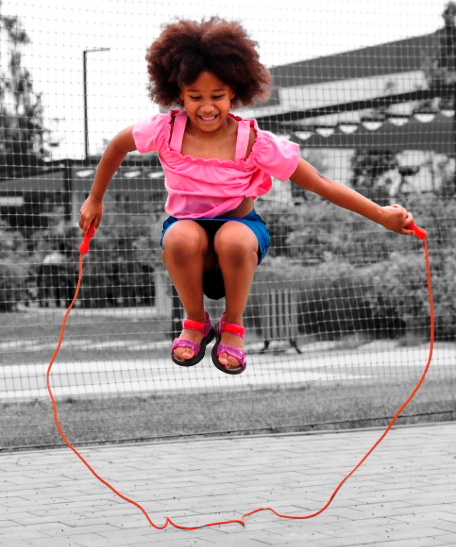
Práticas generalizadas que promovam a disponibilidade de alimentos e bebidas saudáveis, bem como a prática de atividade física em ambientes extraescolares, fortaleceriam os esforços de prevenção a obesidade. O objetivo deste artigo foi descrever princípios que orientem o desenvolvimento de políticas públicas em apoio a práticas de alimentação saudável e atividade física em ambientes extraescolares, visando a prevenção da obesidade. O programa Healthy Kids Out of School foi lançado nos EUA para apoiar a disseminação e a implementação desses princípios orientadores em ambientes extraescolares de curta duração, complementando os esforços em outros contextos extraescolares para mudar as normas relacionadas à alimentação e à atividade física.
Referências
(1) Glickman DL, Sim LJ, Del Valle Cook H, Ann Miller E, editors. Accelerating progress in obesity prevention: solving the weight of the nation. Washington (DC): The National Academies Press; 2012. 1-16,154, 442.
(2) Kim SA, Moore LV, Galuska D, Wright AP, Harris D, Grummer-Strawn LM, et al. Vital signs: fruit and vegetable intake among children — United States, 2003–2010. MMWR Morb Mortal Wkly Rep 2014;63(31):671–6.
(3) Gortmaker SL, Lee R, Cradock AL, Sobol AM, Duncan DT, Wang YC. Disparities in youth physical activity in the United States: 2003–2006. Med Sci Sports Exerc 2012;44(5):888–93.
(4) Beets MW, Tilley F, Kim Y, Webster C. Nutritional policies and standards for snacks served in after-school programmes: a review. Public Health Nutr 2011;14(10):1882–90.
(5) Beets MW, Beighle A, Erwin HE, Huberty JL. After-school program impact on physical activity and fitness: a meta-analysis. Am J Prev Med 2009;36(6):527–37.
(6) National Physical Activity Plan. National physical activity plan for the United States; 2010. http://www.physicalactivityplan.org/NationalPhysicalActivityPlan.pdf. Accessed November 1, 2010.
(7) Afterschool Alliance, JC Penney Afterschool. America after 3pm: the most in-depth study of how America’s children spend their afternoons; 2009. http://www.afterschoolalliance.org/documents/AA3PM_National_2009.pdf. Accessed November 1, 2010.
(8) Singh GK, Kogan MD, van Dyck PC. A multilevel analysis of state and regional disparities in childhood and adolescent obesity in the United States. J Community Health 2008;33(2):90–102.
(9) Wiecha JL, Hall G, Gannett E, Roth B. Development of healthy eating and physical activity quality standards for out-of-school time programs. Child Obes 2012;8(6):572–6.
(10) Wiecha J, Hall G, Roth B. National Afterschool Association standards for healthy eating and physical activity in out-of-school time programs; 2011. Accessed December 13, 2013. http://www.niost.org/pdf/host/Healthy_Eating_and_Physical_Activity_Standards.pdf
(11) Kumanyika K, Parker L, Sim LS, editors. Bridging the evidence gap in obesity prevention: a framework to inform decision making. Washington (DC): The National Academies Press; 2010. 336p.
(12) Economos CD, Bakun PJ, Herzog JB, Dolan PR, Lynskey VM, Markow D, et al. Children's perceptions of weight, obesity, nutrition, physical activity and related health and socio-behavioural factors. Public Health Nutr 2014;17(1):170–8.
(13) Krueger RA, Casey MA, Kumar A. Focus groups: a practical guide for applied research. Thousand Oaks (CA): Sage Publications; 2008. p.113-128.
(14) Mozaffarian RS, Andry A, Lee RM, Wiecha JL, Gortmaker SL. Price and healthfulness of snacks in 32 YMCA after-school programs in 4 US metropolitan areas, 2006-2008. Prev Chronic Dis 2012;9:E38.
(15) Hastmann TJ, Bopp M, Fallon EA, Rosenkranz RR, Dzewaltowski DA. Factors influencing the implementation of organized physical activity and fruit and vegetable snacks in the HOP'N After-School Obesity Prevention Program. J Nutr Educ Behav 2013;45(1):60–8.
(16) Mozaffarian RS, Wiecha JL, Roth BA, Nelson TF, Lee RM, Gortmaker SL. Impact of an organizational intervention designed to improve snack and beverage quality in YMCA after-school programs. Am J Public Health 2010;100(5):925–32.
(17) Gortmaker SL, Lee RM, Mozafarrian RS, Sobol AM, Nelson TF, Roth BA, et al. Effect of an after-school intervention on increases in children’s physical activity. Med Sci Sports Exerc 2012;44(3):450–7.
(18) Rosenkranz RR, Behrens TK, Dzewaltowski DA. A group-randomized controlled trial for health promotion in Girl Scouts: Healthier Troops in a SNAP (Scouting Nutrition & Activity Program). BMC Public Health 2010;10(81):1–13.
(19) Jago R, Baranowski T, Baranowski JC, Thompson D, Cullen KW, Watson K, et al. Fit for Life Boy Scout badge: outcome evaluation of a troop and Internet intervention. Prev Med 2006;42(3):181–7.
(20) Thompson D, Baronowski T, Baranowski J, Cullen K, Jago R, Watson K, et al. Boy Scout 5-a-Day Badge: outcome results of a troop and Internet intervention. Prev Med 2009;49(6):518–26.
(21) Report on trends and participation in organized youth sports: market research report. Stuart (FL): National Council on Youth Sports; 2008. http://www.ncys.org/pdfs/2008/2008-ncys-market-research-report.pdf. Accessed Decem ber 11, 2014.
(22) Overview of Boy Scouts of America. Boys Scouts of America; 2013. http://www.scouting.org/About/FactSheets/OverviewofBSA.aspx. Accessed December 13, 2013.
(23) About Girl Scouts of the USA. Girl Scouts of America; 2013. http://www.girlscouts.org/who_we_are/facts/pdf/facts_gs.pdf. Accessed December 13, 2013.
(24) ChildObesity180 nutrition and physical activity goals. Boston (MA): ChildObesity180; 2013. http://www.childobesity180.org/sites/default/files/documents/ChildObesity180%20Nutrition%20and%20Physical%20Activity%20Goals.pdf#sthash.9vFQHduE.dpuf. Accessed March 27, 2014.
(25) Glasgow RE, Vogt TM, Boles SM. Evaluating the public health impact of health promotion interventions: the RE-AIM framework. Am J Public Health 1999;89(9):1322–7.